UPDATE: The blogger to twitter task has not been working, however the Google Reader to Twitter Task worked fine.
Showing posts with label educational technology. Show all posts
Showing posts with label educational technology. Show all posts
Thursday, April 26, 2012
Exploring the "if this then that" web app: making the Internet work for you
I discovered a neat little web app called ifttt (if this then that) that makes it easy and fun to run "if/then" statements across the internet by utilizing API's of various web apps such as twitter, google reader, instagram, and many more. For example, I set up three if/then tasks to see how it works. The first task I set up was IF I upload a picture to Instagram THEN automatically save a copy of it in my Dropbox. The second task I set up was IF I make a blog post here on blogger, THEN automatically send a tweet out to my terenceonline twitter followers. The third task I set up was IF I star an article in Google Reader THEN send a tweet out to my terenceonline twitter followers linking them to the starred article. There are numerous other if/then statements you can set up and I think people will find ways to get creative with it. This is similar to what Yahoo Pipes was doing back in the day,but this is bit more simple to use. The only draw back I see right now is that you have to authorize IFTTT to access all of the accounts you set up, which isn't uncommon theses days, but may make some people nervous. If you found this article from my twitter then the IFTTT task worked. What are some neat ways that educators can take advantage of IFTTT? One more thing -- This IFTTT recipe page is pretty cool to get ideas of how people are using it http://ifttt.com/recipes
UPDATE: The blogger to twitter task has not been working, however the Google Reader to Twitter Task worked fine.
UPDATE: The blogger to twitter task has not been working, however the Google Reader to Twitter Task worked fine.

Wednesday, April 06, 2011
Google's ambitious world changing project winners
Here are the results of Google's ambitious world changing project, I blogged about in 2009
It was neat to see the Khan Academy as one of the "world changing" winners. It will be neat to see where these projects go!


It was neat to see the Khan Academy as one of the "world changing" winners. It will be neat to see where these projects go!
Project 10100 Winners
We are pleased to announce the winners of Google’s Project 10100.
Thousands of people from more than 170 countries submitted over 150,000 ideas. From that group, we narrowed it to the final 16 ideasfor public vote.
The following five ideas received the most votes and are the winners of Project 10100. Over the past 12 months, we have reviewed concrete proposals to tackle these ideas. We are pleased to give a total of $10 million to five inspiring organizations working on solutions to each of these global challenges:
Idea: Make educational content available online for free
Project funded: The Khan Academy is a non-profit educational organization that provides high-quality, free education to anyone, anywhere via an online library of more than 1,600 teaching videos. We are providing $2 million to support the creation of more courses and to enable the Khan Academy to translate their core library into the world’s most widely spoken languages.
Idea: Enhance science and engineering education
Project funded: FIRST is a non-profit organization that promotes science and math education around the world through team competition. Its mission is to inspire young people to be science and technology leaders by giving them real world experience working with professional engineers and scientists. We are providing $3 million to develop and jump start new student-driven robotics team fundraising programs that will empower more student teams to participate in FIRST.
Idea: Make government more transparent
Project funded: Public.Resource.Org is a non-profit organization focused on enabling online access to public government documents in the United States. We are providing $2 million to Public.Resource.Org to support the Law.Gov initiative, which aims to make all primary legal materials in the United States available to all.
Idea: Drive innovation in public transport
Project funded: Shweeb is a concept for short to medium distance, urban personal transport, using human-powered vehicles on a monorail. We are providing $1 million to fund research and development to test Shweeb’s technology for an urban setting.
Idea: Provide quality education to African students
Project funded: The African Institute for Mathematical Sciences (AIMS) is a center for math and science education and research in Cape Town, South Africa. AIMS’ primary focus is a one-year bridge program for recent university graduates that helps build skills and knowledge prior to Masters and PhD study. We are providing $2 million to fund the opening of additional AIMS centers to promote graduate level math and science study in Africa.
Tuesday, April 05, 2011
Khan Academy is Tip of the Iceberg in Education Reform
The first time I learned about the Khan Academy about a year ago, I thought, "this is just the tip of the iceberg in reforming education." I posted Sal Khan's TED talk a few posts ago and I recommend checking that out if you are unfamiliar with his story. Free, easy to follow, online educational videos in subjects such as math, history, science, languages, etc will equip schools like never before. Instead of getting lectures and lessons in class and getting homework at home, we flip that around. We get the lectures at home via free video tutorials and online lessons and we get hands on learning, active discussion, and assistance from the teacher during class in real-time. The online videos actually make it easier for the student to learn as they can pause, rewind, and fast forward the videos. The Khan Academy is loading thousands and thousands of curriculum based videos to the web for free along with assignments, quizzes, and even games that encourage achievements in learning. Khan says his method of learning, "will liberate teachers from the standard "one-size-fits-all" lesson plan and help to "humanize the classroom." I think these videos represent just a fraction of the potential that can be harnessed in online and blended learning. The fact that one guy made thousands of educational videos that are actually pretty good, will give schools something to think about regarding how they can use asynchronous learning to improve the educational system. These are exciting times. Check out this article - http://www.huffingtonpost.com/2011/04/04/the-khan-academy-and-educ_n_844390.html
Friday, October 15, 2010
Powerful Lecture by Sir Ken Robinson on the Need For a Changing Educational Paradigm
I enjoyed both the content of this lecture and the creative way in which it was produced. I love how the art in this video engaged and connected my brain to the content of the lecture itself. I could see this communication method as a very powerful online learning tool where artists and teachers collaborate to engage the learners. Check it out
Monday, August 30, 2010
New Blog Design, New Post - Innovation always tops greed and complacency. Always.
It's been a while since my last post, but my new blog design, combined with a thought provoking TechCrunch article inspired me to write a fresh new post. I found this article in TechCrunch to be very insightful regarding disruptive technologies and how they change things rapidly. This particular article, titled- The Full-On Assault On Cable Is Underway is about how the CABLE industry in particular is being shaken up by emerging technology giants such as Google, Apple, Amazon, and Netflix. In a nutshell, the internet can provide people with the ala carte TV viewing experience people have been asking cable companies to give them for a long time. But cable companies have been slow to respond to this demand because they had very little reason to do so. Now that TV's are having wi-fi built in, one can connect to the internet and hook up with Netflix, HULU, Google TV, Apple TV, Amazon On-Demand, YouTube and many other options. The main problem with this model currently is content, but that is changing rapidly. I myself canceled cable last year and elected to subscribe to Netflix for $9/month. I can get over the air HD channels too, which is a nice free option. With increased connectivity and options, Cable companies are going to be forced to innovate or as the article puts it, "...surrender and fall back into its role as a dumb pipe for the Internet. Innovation always tops greed and complacency. Always. The assault is underway." Disruptive technologies change paradigms drastically. "The music industry has already been disrupted. The book industry has been disrupted. The mobile industry has been disrupted" and now the CABLE industry is being disrupted. The writing is on the wall for the CABLE company so they better innovate and compete or simply become Internet Service Providers. As this blog is primarily about emerging technologies and education, I can't help but see connections to Higher Education. Bill Gates sees the disruption in Higher Ed and predicts that "In Five Years The Best Education Will Come From The Web." The Colleges and Universities that will be prepared, unlike the CABLE companies, have already been making strategic plans that take into account the nature of disruptive technology and will leverage the technology for the betterment of their institution and their students' experience.
"People probably never thought the Kindle and other similar devices would lead to a changing of the book industry as quickly as it has — but it’s happening, just ask the Borders down the street from me which is going out of businesses." Does your University think more like Amazon or Borders?
"People probably never thought the Kindle and other similar devices would lead to a changing of the book industry as quickly as it has — but it’s happening, just ask the Borders down the street from me which is going out of businesses." Does your University think more like Amazon or Borders?
Tuesday, May 11, 2010
My Interview with McGraw Hill on Distance Education and Online Technologies
This past year I was interviewed in the "Thought Leader" section of McGraw Hill's Principles of Management Newsletter. In the interview I respond to the following questions regarding distance education and online technologies:
- How did you come to do work in distance education?
- What is your favorite distance learning activity or experience?
- How does distance learning enrich your life … your career... as opposed to traditional in-class teaching?
- Describe a “zinger” that unexpectedly challenged you in your distance teaching? How did you address it and what were the results?
- What are your distance learning principles for success?
- Is there one distance learning principle you hold most dear, that you will always do? Is there one thing you will never do, no matter what, in distance education?
- How do you see distance courses changing over the next 5-10 years?
- What are your hopes for the future of distance learning in higher education?
Tuesday, March 23, 2010
Jetpack for Learning” Design Challenge Winners Announced at SXSW : The Mozilla Blog
“Jetpack for Learning” Design Challenge Winners Announced at SXSW :: The Mozilla Blog

“Jetpack for Learning” Design Challenge Winners Announced at SXSW
Posted by Erica Jostedt
March 14th, 2010 · Mozilla Labs, Mozilla News
Editor’s note: On March 13, Mozilla Labs announced the Jetpack for Learning Design Challenge winners at the the Mozilla SXSW Happy Hour. For more details, check out Aza Raskin’s announcement on the Mozilla Labs blog, reposted below:
Three projects of the Jetpack for Learning Design Challenge were awarded special prizes at the Mozilla SXSW party today. Ten projects already selected as Design Challenge winners participated in a design camp in Austin, TX over the past three days. Today three of these projects were chosen for special awards: ClozeFox was selected as “best use case”; the project leader of Mupple received the prize for “sharing knowledge with others”; Expression Widgets was chosen as the “best web hack”. You can find more information about them and download all Jetpacks-based add-ons from the Design Challenge wiki.
Wednesday, January 06, 2010
Did You Know 4.0
This is another official update to the original "Shift Happens" video. This completely new Fall 2009 version includes facts and stats focusing on the changing media landscape, including convergence and technology, and was developed in partnership with The Economist. For more information, or to join the conversation, please visit http://mediaconvergence.economist.com and http://shifthappens.wikispaces.com.
Friday, November 06, 2009
Google Wave First Impressions
I've been using Google Wave for a couple weeks now and can see how the Wave could be a home run like google's email system, GMAIL or a "swing and a miss" like Google's social network, Orkut. I say Orkut is a swing and a miss, because it's not a strike out. There's still a lot more pitches to hit. A swing and a miss is not necessarily about the idea but about the adoption and whether people will buy into it. The idea behind Google wave is quite genius, makes a lot of sense, and moves the evolution of online collaboration forward whether it succeeds or stagnates. I personally think Google Wave resembles a Wiki with real-time editing abilities, more-so than it does email, though it can be used for both, which makes explaining it a little tricky. It combines instant messenger, discussion boards, emails, and wikis into one platform. It's one of those systems that can be used for very simple things like Instant Messaging as well as complex things like real-time wiki editing in which 10 people are contributing to the document. One can see the more powerful aspects of Wave in a large group collaboration setting. If you haven't done that yet, then the big idea might escape you. I personally like using Wave and found that it has already been a helpful tool in collaborating with my colleagues on a logo design for an online program at BGSU. I enjoy how easy it is to upload images and comment on each others uploads. Wave is still in Preview (pre-beta) so it wouldn't be right for me to go on about all the bugs I've found at this point. Once it's in Beta, I'll have a more in depth post on the bugs. The point of a preview is to get people using it so that Google can work out the bugs and open it up to larger groups. I really think online education organizations should pursue Google Wave and pilot it now. If any Google Engineers are reading this blog, please contact me as I know of at least 1 Graduate program at Bowling Green State University that would pilot Google Wave as the main collaborative tool the students would use for the program. I'm sure great research will come of it and you know we are only about 1.5 hours south of you.
A couple things I'd like to see added to Google Wave:
A couple things I'd like to see added to Google Wave:
- I like GMAIL so much that I'd like Wave to notify my Gmail when a Wave has been updated. I know Wave can be used like email, but currently I can only wave to people that have wave accounts, so I'll keep using GMAIL for email until then.
- I'd also like to see the GMAIL chat feature (text, audio, video) integrated into Google Wave. Maybe wave could deliver a 10+ person video chat? Sometime people just want to chat and not type anything or clutter up the Wave.
- I'd like to see a Google Wave Plugin/Extension Website similar to Firefox's Plugin Website. Please make it "Firefox" easy to find and implement plugins/bots from within wave. For that matter, tell the Chrome people to do that too, because that is the main thing holding me back from jumping deeper into Chrome. I really like the Chrome Browser, it just lacks the plugins. [Edit: I found this Google Wave Bots Wiki, which lists the known bots/plugins for Google Wave]
- Make it easier to embed any code, similar to how most wikis, blogger, and other blog sites work.
Thursday, September 17, 2009
A few of my distance learning principles for success
First, you have to have a passion for learning new things. You can't ever be satisfied with the status quo, especially since we live in the "Information Age." My action steps for this principle are to start subscribing to prominent bloggers in your field today. And if you want to be looked upon as an expert in your field, start contributing to the conversations in your field by starting a blog and writing about issues in your own field that you are passionate about. This will open up a whole new world to you and lead to many new connections. This is one of the reasons I eagerly developed a University-wide blogging system for BGSU (https://blogs.bgsu.edu). Every student, faculty, and staff member can create as many blogs as they want. It has been awesome to see what happens when everyone at the university has a voice on the web. They create, communicate, and collaborate in ways not possible in years past. The day of hording information is over because information is ubiquitous and we have now entered the day of sharing information. It's those that know what to do with all the good information on the internet that will make a difference in the world. If you don't believe me, ask yourself why MIT has uploaded 1900 courses to the internet as well has hundreds of other schools. They understand that information is not the commodity, it is the interaction with experts and peers from a community of learners around that information. Second, if you are an online instructor, communicate, communicate, communicate, with your learners. Many people just entering the world of distance learning may think of it as a glorified correspondence course, however they could not be further from the truth. Online learning actually facilitates many new streams of interaction and communication and the best instructors leverage those streams in their courses (i.e. social networks, blogs, twitter, youtube.) However, they must use these technologies appropriately and with much wisdom, as they may end up just generating noise instead of true learning opportunities. It is for this reason at BGSU that we have an expert staff of educational technologists in the Center for Online and Blended Learning, to work with our online faculty.
Thursday, August 27, 2009
The World is Open
News: 'The World Is Open' - Inside Higher Ed
A very fascinating read. The open access to educational materials and experts is virtually limitless. What role do universities play in such an open educational world. For example, in years past, one aspect of accreditation for colleges involved access to scholarly journals, but as the article reveals in the following quote, this has changed drastically in the information age, "When I was in primary school in the 1960s and 1970s, I had to walk next door to borrow the Compton Encyclopedia volume that I needed. They were free for me to use when the neighbors were home. Today, Yahoo! Education provides free access to the Roget’s II Thesaurus (260,000 synonyms and cross references), Colombia Encyclopedia (more than 50,000 entries and 84,000 hypertext cross-references between the content), and American Heritage Dictionary (definitions, word spellings, and word suggestions as well as more than 200,000 entries, 70,000 audio word pronunciations, and 900 full-page color illustrations). If that is not enough, there is the Encyclopedia Britannica, and yes, that trusty Wikipedia that is now the seventh most accessed Web site in the United States." After reading the article, "What are a few ways you expect these movements to change higher education in another 10 or 20 years?"

Technology is changing higher education in more ways than can be counted. Distance education has become common. Leading universities are putting course materials or even entire courses online -- free. The Obama plan for community colleges envisions free online courses that could be used nationwide. Curtis J. Bonk, a professor of instructional systems technology at Indiana University, surveys this landscape in The World Is Open: How Web Technology is Revolutionizing Education (Jossey-Bass). Bonk responded to questions about the book in an e-mail interview.
A very fascinating read. The open access to educational materials and experts is virtually limitless. What role do universities play in such an open educational world. For example, in years past, one aspect of accreditation for colleges involved access to scholarly journals, but as the article reveals in the following quote, this has changed drastically in the information age, "When I was in primary school in the 1960s and 1970s, I had to walk next door to borrow the Compton Encyclopedia volume that I needed. They were free for me to use when the neighbors were home. Today, Yahoo! Education provides free access to the Roget’s II Thesaurus (260,000 synonyms and cross references), Colombia Encyclopedia (more than 50,000 entries and 84,000 hypertext cross-references between the content), and American Heritage Dictionary (definitions, word spellings, and word suggestions as well as more than 200,000 entries, 70,000 audio word pronunciations, and 900 full-page color illustrations). If that is not enough, there is the Encyclopedia Britannica, and yes, that trusty Wikipedia that is now the seventh most accessed Web site in the United States." After reading the article, "What are a few ways you expect these movements to change higher education in another 10 or 20 years?"
Thursday, August 20, 2009
BLOGS.BGSU a Digital and Educational Revolution at Bowling Green State University
There is a lot more than meets the eye to BLOGS.BGSU.EDU, the homegrown blogging platform developed by Assistant Director of COBL, Terence Armentano. Blogs and microblogs such as Twitter have taken the world by storm. Why? Because they blast open the floodgates of communication. They give everyone a voice and anyone with an internet or even a mobile phone connection can listen in and talk back. Upon closer inspection of BLOGS.BGSU, one will notice it is not just about new technology, it's about a movement, a change in thinking, a paradigm shift, a leveling of the proverbial playing field. It's about what happens to a university when everyone has a voice. For the first time in history, we can leverage the collective intelligence of the university to potentially solve greater and more complex problems in the world. Think about the following scenario: Everyone at the university has unique life experiences and varying degrees of expertise in life. Some have much more life and work experience than others, but surely the sum is greater than its parts. For example, if we have around 20,000 faculty, staff, and students here at BGSU and the average age is 25 then we have 500,000 years of experience between us that we can learn from. BLOGS.BGSU is a great way to leverage such experiences as everyone can contribute. And this is just the tip of the iceberg.
BLOGS.BGSU is built upon the Wordpress platform, and everyone with a BGSU email account can login today and start blogging. However, upon closer investigation of the system, one will notice that it can be used to do more than blog. In fact, one will discover the nerve center of a web 2.0 revolution at BGSU in which students, faculty, and staff are creating, consuming, categorizing, and publishing content to the internet as well as networking, interacting, discussing, and critiquing each others posts. The system is so flexible it can be used to build everything from a simple news blog to a web 2.0 portal complete with static and dynamic web pages, blogs, podcasts, flickr integration, Google statistics tracking, and more. Depending on one's goals, the system can be leveraged to create websites, portfolios, tweets, podcasts, journals, news sites, and more. One of the best ways to understand this phenomenon is to view examples of how it is being used. The following are just a few of the creative ways in which people and departments at BGSU are using the system:
Center for Online and Blended Learning
Academic Technology
BGSU Strategic Planning Blog
Dr. Sue Mota - MBA 6070x
Brad's Art 101 Blog
Blackboard Video Tutorial Database Blog
MBA Blog
Jake Graving's Art 101 Blog
Music Library and Sound Recordings Archives News
Center for Teaching and Learning
BLOGS.BGSU is built upon the Wordpress platform, and everyone with a BGSU email account can login today and start blogging. However, upon closer investigation of the system, one will notice that it can be used to do more than blog. In fact, one will discover the nerve center of a web 2.0 revolution at BGSU in which students, faculty, and staff are creating, consuming, categorizing, and publishing content to the internet as well as networking, interacting, discussing, and critiquing each others posts. The system is so flexible it can be used to build everything from a simple news blog to a web 2.0 portal complete with static and dynamic web pages, blogs, podcasts, flickr integration, Google statistics tracking, and more. Depending on one's goals, the system can be leveraged to create websites, portfolios, tweets, podcasts, journals, news sites, and more. One of the best ways to understand this phenomenon is to view examples of how it is being used. The following are just a few of the creative ways in which people and departments at BGSU are using the system:
Center for Online and Blended Learning
Academic Technology
BGSU Strategic Planning Blog
Dr. Sue Mota - MBA 6070x
Brad's Art 101 Blog
Blackboard Video Tutorial Database Blog
MBA Blog
Jake Graving's Art 101 Blog
Music Library and Sound Recordings Archives News
Center for Teaching and Learning
News from the Curriculum Resource Center
The Rec Well Wire - Connecting Recreation and Wellness Enthusiasts
Dr. Natvig’s BGSU 1000 Blog -This blog is the main site for the music section of BGSU1000
Dr. Natvig’s BGSU 1000 Blog -This blog is the main site for the music section of BGSU1000
SMC Blog - School of Media and Communication news/event blog
Second Life Virtual Campus
BGSU University Libraries News
Carolyn Kraut - Instructional Designer, COBL
Terence Armentano - Assistant Director, COBL
Jordian Ross - Student Blog and PortfolioSecond Life Virtual Campus
BGSU University Libraries News
Carolyn Kraut - Instructional Designer, COBL
Terence Armentano - Assistant Director, COBL
International Studies - The blog for International Studies majors at BGSU!
Dr. Gwen Evans - Companion site to Third Year Review
Language Learning
Interactive Communication Technologies Course BlogDr. Gwen Evans - Companion site to Third Year Review
Language Learning
Thursday, June 04, 2009
Colleges consider using blogs instead of blackboard: Getting closer, but not completely thought through, in my opinion
The article titled, "Colleges Consider Using Blogs Instead of Blackboard" in the Chronicle of Higher Education, gets some things right and some things wrong, in my opinion. I want to keep this somewhat short because I could write a novel on this topic. First, they understand that paying hundreds of thousands of dollars for Blackboard might not be the best technological solution to facilitate learning. Second, they have experienced the sheer power of the Wordpress blogging platform, which can be used to develop websites that facilitate online learning, eportfolios, blogs, and more... PLUS it's OPEN SOURCE. Yes, it's license free. "What? Something must be wrong with it then." Nope, only one's inability to understand open source software and how it works. We have implemented Wordpress at BGSU as the foundation of our web 2.0 learning landscape. The platform enables the brilliant minds of our university to easily consume, collaborate, communicate, and create content. It facilitates the publication of audio, video, images, and presentations quite easily. In fact, I am giving a presentation on our Wordpress project at the 2009 Moodle Moot/ Sloan-C Conference in San Francisco. In essence, the Wordpress Platform is very powerful and customizable and could be used to deliver great content. If the only thing they wanted a learning management system to do was to present content and provide an interactive platform for learning, then it would meet their needs just fine, but the Learning Management System must do more than that. Wordpress, without tons of customizations to the core, cannot and does not provide the same functionality that a Learning Management System can provide. A better direction for CUNY to go would be to continue to support Wordpress because it is an amazing teaching and learning platform, BUT ALSO look into implementing Moodle, an open source learning managements system, to replace Blackboard if they are unhappy with Blackboard. I personally think Blackboard and Moodle are equals with very different price tags. Either way, the technological infrastructure of Moodle and Blackboard is designed to do different things than the technology in Wordpress. For example, Moodle and Blackboard both have grade books, test creation tools, advanced discussion forums, assignment drop boxes, and they interface with a variety of Student Information Systems for enrollment management. To draw an analogy from a brick and mortar classroom, Moodle/Blackboard would be a classroom with a locked door equipped with chalkboard, desks, computers, projector, and other cool teaching and learning tools. Wordpress would be like equipping all the computers in the classroom with state of the art technology that enables the teachers and students to take teaching and learning to another level that neither Learning Management Systems can provide on their own. Yes, they will both claim to have blogging features, but as I stated before Wordpress is much more than a blogging platform. My point is that CUNY would be better off looking at Moodle and Wordpress as an open source alternative to Blackboard instead of just Wordpress.
Wolfram Alpha - Making the world's knowledge computable - Now What?
See ya later great knowledge memorizers of the world, and hello great knowledge appliers of the world. Is it me or are the people inhabiting this third rock from the sun, connecting, computing, and collecting knowledge like nothing we've ever seen before. Well, except for maybe the time we humans tried building that Tower of Babel, which ended up not working out so well. Introducing.... Wolfram Alpha, a powerful computational knowledge engine that seeks to make all systematic knowledge immediately computable by ANYONE. Connect this to a mobile device and we become walking and talking systematic knowledge carriers. We've had access to knowledge via the internet for quite some time, but this immediate access to systematic knowledge is something a little newer and worth pondering. I wonder if teachers will FINALLY stop creating tests that assess our students ability to memorize facts and start testing the application of those facts to solve real world problems. I'm especially looking at Universities to take up this challenge. With tools like Wolfram Alpha and Google Squared available to us, educational institutions should start building curriculum with the highest levels of Bloom's Taxonomy in mind. Maybe instructional designers could start with the fact that humans have access to just about all the available knowledge in the world and build from there. It sounds kind of funny, but it's true. This doesn't mean everyone understands the knowledge, but for the first time in history we do have easy access to it. Therefore, it is crucial we teach students where to find the knowledge, and then help them develop the skills to apply, analyse, synthesize, and evaluate it. We need to re-think assessment and skill acquisition for this day and age in this Knowledge Economy. It's time for schools to build curriculum that challenge us to really engage in the application of knowledge and not the memorization of definitions, forumulas, and factoids. That's lazy instruction. Yes, there is a place for memorizing in education...It is a good idea for teachers to memorize their students' names and interests. Personally, I don't care how great of a memorizor my accountant is. I want to know if that person can think about whole systems and solve financial problems that can save me money. What does it mean for you to have access to the world's systematic knowledge? How will you apply it? What does it mean for schools? How can they apply tools like Wofram Alpha and Google Squared to their curriculum. What does it mean for businesses? What do you think?

Wednesday, April 01, 2009
BGSU's Huber honored for online textbook
 Here is nice article about one of BGSU's own faculty creating and teaching from an e-book. I like that Dr. Huber not only recognizes the value in saving paper and the students money, but also that the e-book platform offers a more interactive experience with the material. Huber says, "The material in an animal behavior class is highly visual by its very nature and loses much of its student appeal when it gets reduced to simple lines in a printed textbook. "The same idea can be applied to teaching fully online courses as well. There are so many online tools available to engage students in the material that teaching online, when done right, can be an extremely affective means of education.
Creating a free, online textbook used by students in his Animal Behavior class has earned Dr. Robert Huber, a professor of biology at Bowling Green State University, one of the inaugural 10 Faculty Innovator Awards from the University System of Ohio (USO).
Huber and his fellow recipients were honored March 24 in Columbus, where they received the $1,000 cash award for using technological innovation to reduce the cost of textbooks to students. They were recognized by Gov. Ted Strickland and the Ohio House and Senate, as well as by Eric Fingerhut, chancellor of the Ohio Board of Regents.
In addition to the textbook posted at Wikibooks, Huber "provides additional course material at no cost to students, including online media and lecture-note archives," the USO pointed out in its commendation... read entire story

Thursday, February 26, 2009
University 2.0: How BGSU Leveraged Open Source Technology to Create a Web 2.0 Learning
I will be presenting at the 2009 LTT Conference in Columbus, Ohio on Monday at 11:15am. Here are the details about my presentation
My presentation is about how COBL, the Center for Online and Blended Learning, leveraged open source technologies to create a web 2.0 learning landscape at BGSU. At the core of the learning landscape is a web 2.0 personal publishing platform that supports the community's social, professional, and learning activities. The system enables BGSU faculty, staff, and students to create interactive websites, eportfolios, blogs, podcasts, and more. If you will be attending my presentation, we will be discussing the following:
- How is web 2.0 revolutionizing the learning environment?
- What makes a good publishing platform to build a web 2.0 learning landscape?
- How do portfolios, podcasts, blogs, and interactive web sites add value to the learning environment?
- What kind of support is needed to maintain an open source publishing platform?
- What kind of situations (academic, legal, social) might arise when enabling everyone at the university to have a voice and publish that voice?
- What kind of policies should be in place to ensure the protection of the university and it's faculty, staff, and students?
- Whose responsibility is it to monitor the content on the system? Why?
- How can universities leverage the interactive nature of the publishing platform to improve the university?
Monday, December 08, 2008
Research shows better learning when students use sites and sounds
This article and supporting research explains why it is important for instructors to implement blogs and wikis into course projects. It's not just about the bells and whistles folks...
One qualitative study, which surely won’t be welcomed by manufacturers of basic word processing software, found that students who create and edit documents using Web-based collaboration tools include more complex visual media in their assignments — and come away with a better understanding in the process. Another ongoing experiment finds, with statistical significance, that instructors can be more effective in grading students’ work if they record their comments directly into documents as audio.
One qualitative study, which surely won’t be welcomed by manufacturers of basic word processing software, found that students who create and edit documents using Web-based collaboration tools include more complex visual media in their assignments — and come away with a better understanding in the process. Another ongoing experiment finds, with statistical significance, that instructors can be more effective in grading students’ work if they record their comments directly into documents as audio.
Tuesday, November 18, 2008
VoxOx - One service to unify them all?
I thought this service looked interesting and potentially useful. Teachers educating students in the information economy know that their are tons of different ways to communicate and engage students in the learning process, so perhaps a service that unites all communication methods into one central location might be useful. VoxOX goes after Skype and the VoIP market while attempting to connect our interconnected world of email, text messaging, social networks, etc. It seems like a helpful idea, but I don't know if people will be willing to take the time to input all of their communication networks into this service as the quality is still an unknown. Also, web 2.0 apps live and die by their community and this one is still small since it's just beginning. Will it gain momentum?
On an aside, since google just added video chat to gmail and they are spear heading the android project, I am inclined to centralize most of my communications via google, however, I know this solution leaves out social networks for the most part but that might be ok. What other reasons are there to try out a solution like VoxOx?
from the VoxOx site:
VoxOx.com | Blog
On an aside, since google just added video chat to gmail and they are spear heading the android project, I am inclined to centralize most of my communications via google, however, I know this solution leaves out social networks for the most part but that might be ok. What other reasons are there to try out a solution like VoxOx?
from the VoxOx site:
VoxOx.com | Blog
VoxOx is the first ever "Universal Communicator Service" that unifies all of today's key communication channels - voice, video, Instant Messaging (IM), text, social media, e-mail, and content sharing - into a single, intuitive interface that gives you control of your contacts, conversations and most importantly, your interconnected lifestyles, both now and in the future! It combines the benefits of VoIP solutions, interoperable IMs, Web services and social networking aggregators, and much more at no cost.
Thursday, September 18, 2008
Cool Tools for Schools
The following wiki provides links to tons of cool web apps that can be used in education. Check it out...
http://cooltoolsforschools.wikispaces.com/
http://cooltoolsforschools.wikispaces.com/
Wednesday, September 10, 2008
Free Book Opportunity!
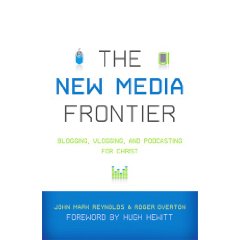 Everyone loves free stuff - so how about a free copy of The New Media Frontier, by John Mark Reynolds and Roger Overton. I contributed to the book by co-writing chapter 5 on podcasting and new media. Crossway, the publisher, will be sending a free copy of the book to the first 30 people who agree to post a review on their blog or Facebook page. Here are the details:
- Send an email to marketing@crossway.org with the subject "New Media Frontier Giveaway" with your name, mailing address, and blog address.
- Crossway will send you a shiny new copy of The New Media Frontier.
- Read the book and post a review on either a blog or your Facebook profile so all your friends can see it by October 31st, 2008.
- Cross-post your review on Amazon.com
Subscribe to:
Posts (Atom)